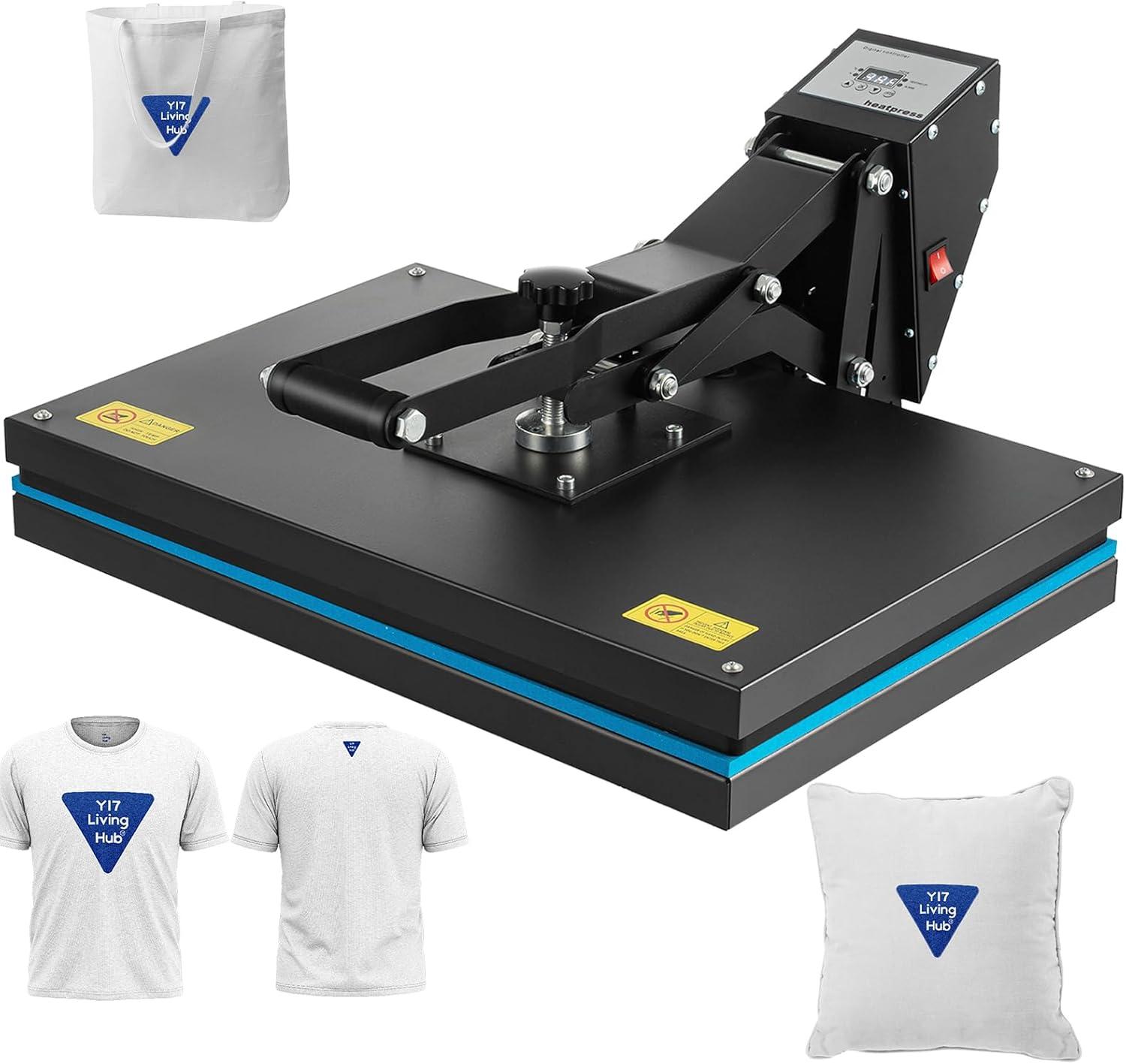
When we first lifted the box for the 16×24 clamshell heat press, it felt like unboxing a promise: a large platen, digital controls, and an advertised 1800W heater ready to take home-crafting up a notch. After spending several weeks pressing T‑shirts, onesies, and a handful of test sublimation pieces, we can say this unit delivers exactly what its spec sheet promises in many ways – fast heat up, an even Teflon‑coated platen, and straightforward digital temperature and timer controls that make repeating jobs painless.
Out of the gate we appreciated how quickly it reached target temperatures and the firmness of the clamshell pressure. The adjustable full‑range knob and hydraulic rod give you real control over pressure, and the machine’s two programmable modes (once we figured the quirks out) sped up batch work. For hobbyists and small‑scale sellers, the 16″ x 24″ surface hits a sweet spot: roomy enough for most adult shirts up to XL, but compact enough to sit on a dedicated tabletop without dominating the room.
That said, this isn’t a perfect pro‑shop replacement. The build has a budget feel in places – the base can feel unsettled if you don’t give it a sturdy surface, and closing the press can take more elbow grease than expected. We didn’t encounter catastrophic failures, but some buyers report inconsistent units and durability issues, so quality control appears uneven. Also, it arrives basic: two Teflon sheets are included, but no extra attachments or detailed instructions, so expect a little trial and error with settings for things like DTF or thick materials.
In the rest of this review we’ll walk through our real‑world test results, ease of use, durability observations, and whether this press represents good value for the kind of work you want to do. If you’re deciding between a budget large‑format press and investing in a pricier commercial model, our hands‑on notes should help clarify which path makes sense for your shop or hobby.
Our Overview After Hands On Testing of the Heat Press 16×24 Inch Clamshell
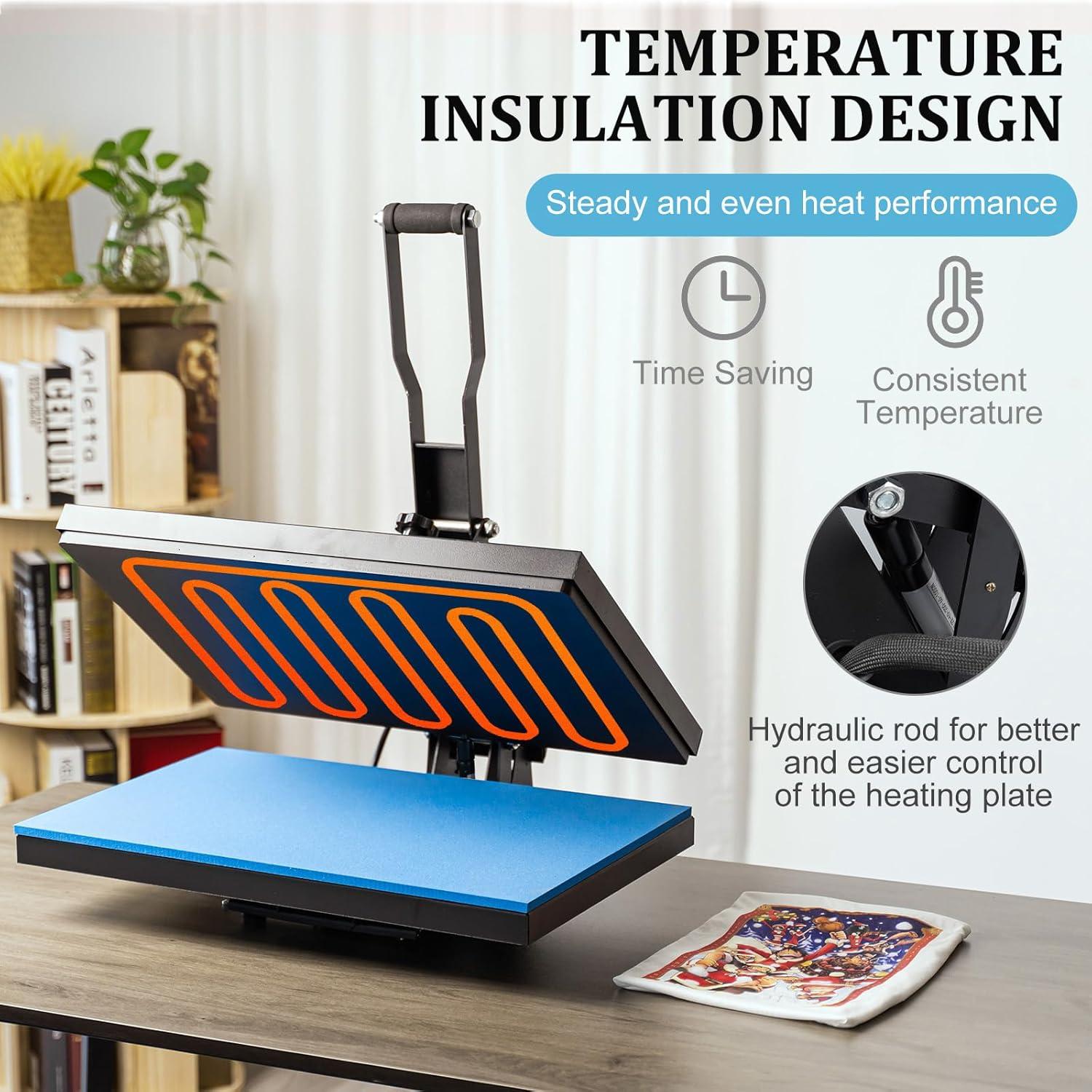
After spending time with the clamshell heat press we found the day-to-day experiance pleasantly straightforward: setup was swift, the fully digital temperature and time controls are clear and the 1800W heater brings the Teflon‑coated platen up to temp fast and evenly. In practice we got vibrant, professional-looking transfers on a range of materials – T‑shirts, mouse pads and flat substrates – and the adjustable full‑range pressure knob plus the hydraulic rod made dialing in pressure for thicker items much easier than expected. We also appreciated small usability touches like the automatic alarm and the two saved program modes (once you figure the programming quirks out). Highlights at a glance:
- Fast, even heat from the thickened plate
- Clear digital controls and timer/alarm
- Large 16″×24″ surface for bigger projects
- Good value for the features offered
| Quick Specs | Details |
|---|---|
| Power | 1800 W |
| Temp Range | 32-400°F (0-205°C) |
| Area | 16″ × 24″ |
| Extras | 2 Teflon sheets |
We remained pragmatic about drawbacks: build quality feels like a budget‑pleasant design and stability can be a concern if the press is placed on a flimsy surface – some users reported snapped support arms or shrinkage of pads after long use, and units arriving defective (no heat) do appear in the mix. It also doesn’t ship with many attachments, so expanding to specialty products may require extra purchases. Closing the press can require more force than compact consumer models, and the lack of a slide‑out base makes alignment a bit fiddly on large garments. Our verdict: a capable, high‑value machine for hobbyists and small shops who need a large platen and strong heat, but buyers who require rock‑solid industrial durability or a wider accessory kit should plan accordingly. Ready to try it for your own projects? See current price and buy on amazon
Highlights of the Pressure Power Digital Controls and Overall Usability We Noticed
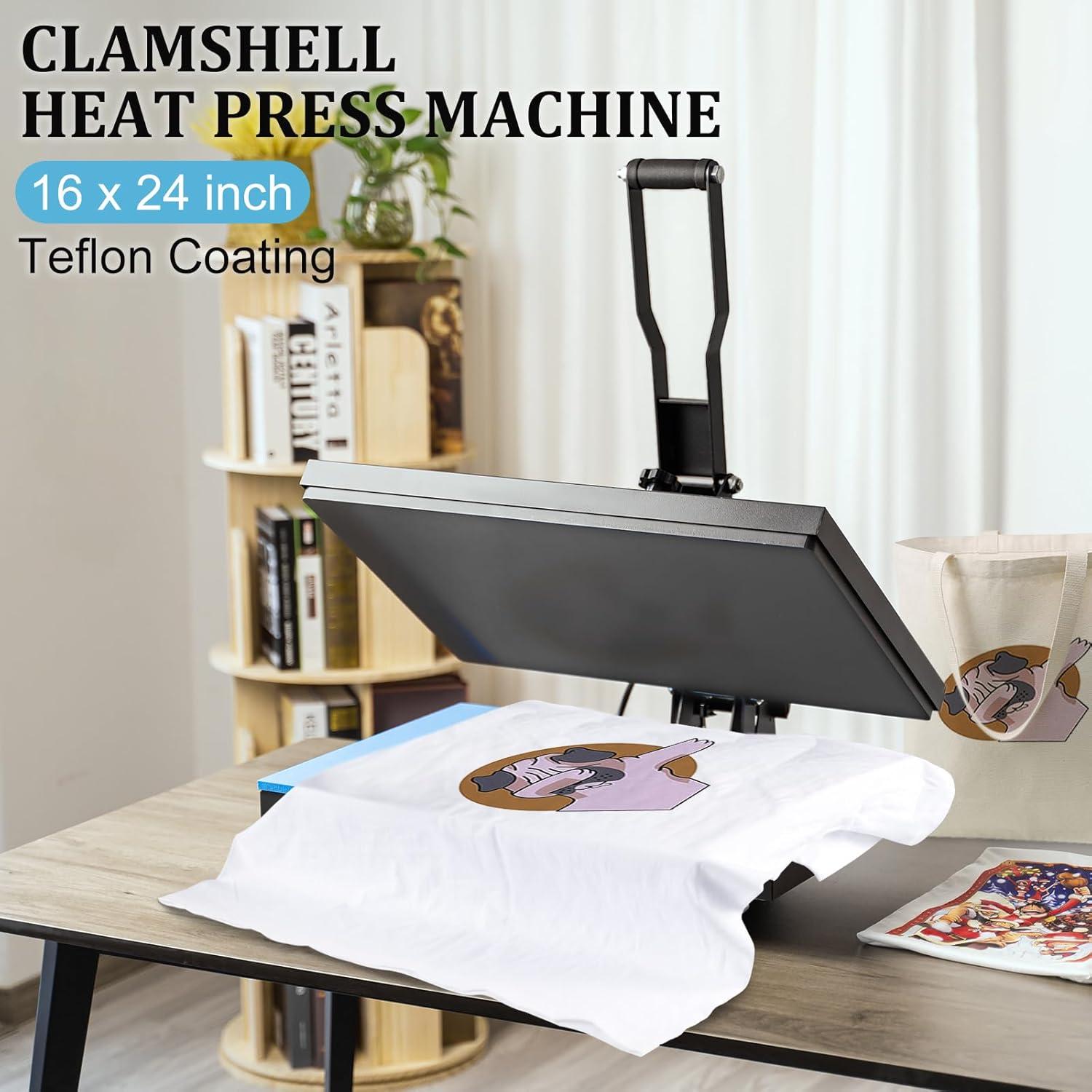
We were impressed by the clean digital interface and how straightforward the temperature and timer felt in everyday use – the luminous LCD makes setting precise temps (32-400 °F) and countdowns simple, and the automatic alarm is a nice touch when runs finish. The machine’s 1800W heating element and Teflon‑coated top platen deliver fast, even heat, while the soft liner and temperature insulation keep transfers consistent and reduce smells. Pressure control is intuitive thanks to the full‑range knob and the added hydraulic rod; between the non‑slip rubber grip and the clamshell design we felt in control of each press. Key highlights we noticed include:
- Digital ease: clear readout, timer and temp are easy to adjust; two saved program modes exist (they can be fiddly at first, but useful).
- Heating & speed: powerful warm‑up and steady heat distribution from the thickened plate.
- Pressure mechanics: adjustable knob + hydraulic assist for firmer, more even pressure.
- Surface finish: Teflon coating and soft liner protect transfers and materials.
| Feature | What We Noticed |
|---|---|
| Temperature Range | 32-400 °F – accurate and responsive |
| Power | 1800W – Heats quickly and holds temp |
| Pressure Control | full‑range knob + hydraulic rod for steady pressure |
| platen Surface | Teflon coated, 16″×24″ workable area |
Overall usability scored high for beginners and hobbyists - we had the unit assembled and pressing within minutes, and everyday tasks like shirts and mouse pads came out vibrant. Having mentioned that, the size and build drew mixed reactions: it’s a great value for most projects up to XL, but some users find it small for larger garments, and a few reported stability issues (one mentioned a back support arm failure), so we recommend a very sturdy work surface. Closing the clamshell can require more force than pricier models, and programming the saved modes takes a little patience the first time. Practical tips from our testing:
- Use a solid table: the unit is heavy – secure it on a stable stand.
- Test settings: run a few scraps to dial in time/temp for DTF or thick inks.
- packing extras: keep spare Teflon sheets and parchment handy for cleaner transfers.
See current price and buy now
Detailed Insights From Our Trials and Practical Recommendations for Best Results
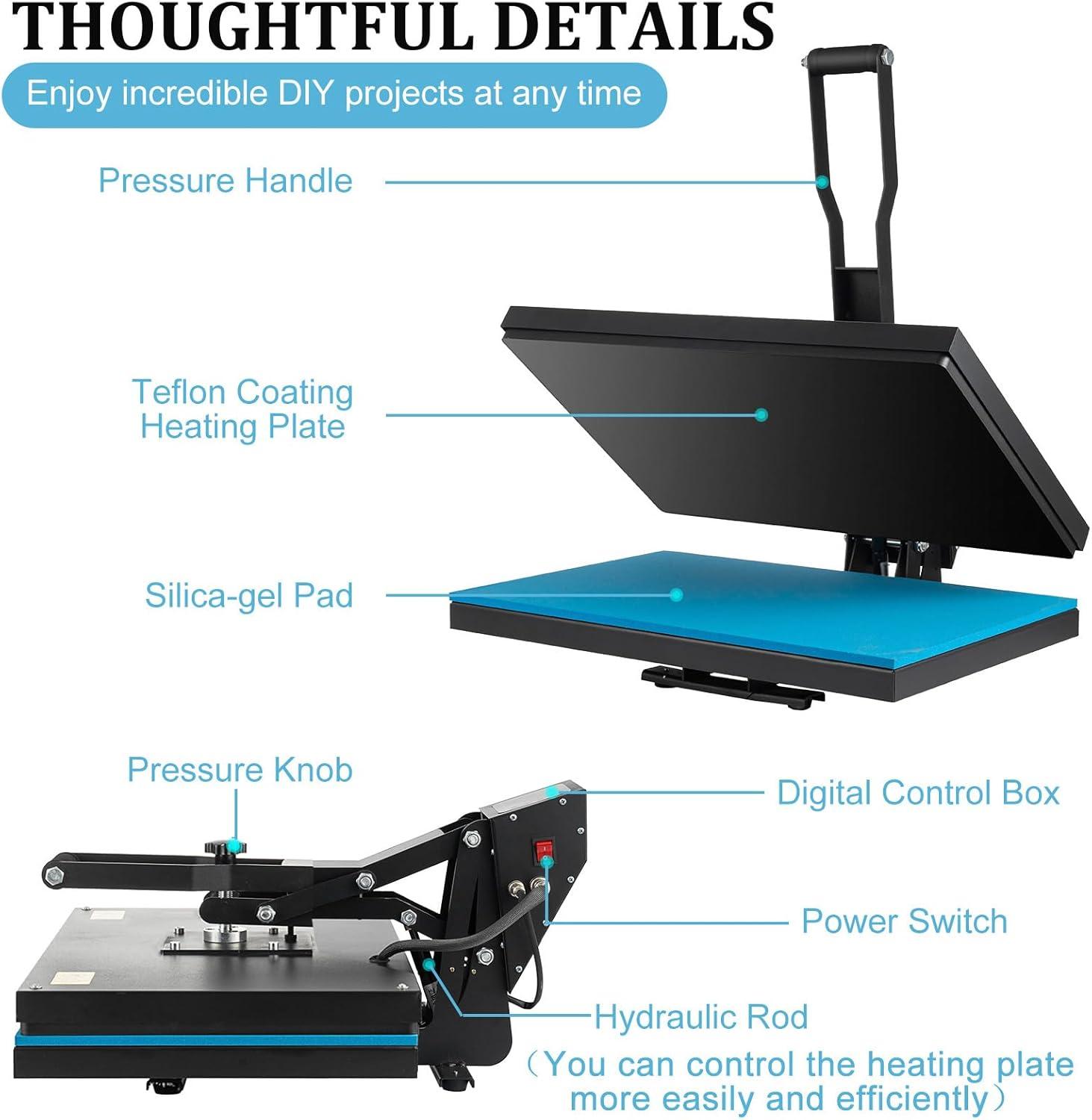
From our hands-on trials we found the machine heats quickly and delivers consistent, even heat thanks to the Teflon-coated, thickened platen and 1800W element-ideal for vibrant transfers and reliable DTF work. The digital controls and audible alarm make timing and temperature straightforward, though the saved program modes can take a little fiddling to lock in. The adjustable full-range pressure knob and hydraulic rod are genuine helpers when moving between thin tees and thicker substrates, but a couple of durability reports (notably a snapped support arm and shrinking lower platen pad) mean we recommend placing the unit on a very sturdy work surface and inspecting fasteners before heavy use. quick practical checks we always run before a job:
- Preheat the platen to target temperature so your first press isn’t undercooked.
- Use a protective sheet (Teflon or parchment) to prevent scorching and adhesive transfer.
- Adjust pressure gradually and test on scrap-too much force can be unnecessary and too little ruins adhesion.
- Test press with a sample to confirm time/temp; save accomplished settings in the unit’s memory.
For best results we recommend starting with conservative timings and increasing as needed; hear are baseline settings we validated in our tests:
| Material | Temp (°F) | Time (s) |
|---|---|---|
| Cotton T‑shirt | 320 | 15 |
| DTF film (cure) | 320 | 3-10 |
| Polyester / Sublimation | 380 | 40-60 |
- If heat seems uneven, recheck the platen pad and seating-the blue pad can compress over time and affect pressure distribution.
- Expect a learning curve for large garments; the 16×24 surface is generous but positioning requires caution to avoid touching the hot plate.
- Attachments are not included-plan to buy specialty platens separately if you expand into mugs or hats.
Grab it now and start pressing
Pros & Cons
Pros & Cons
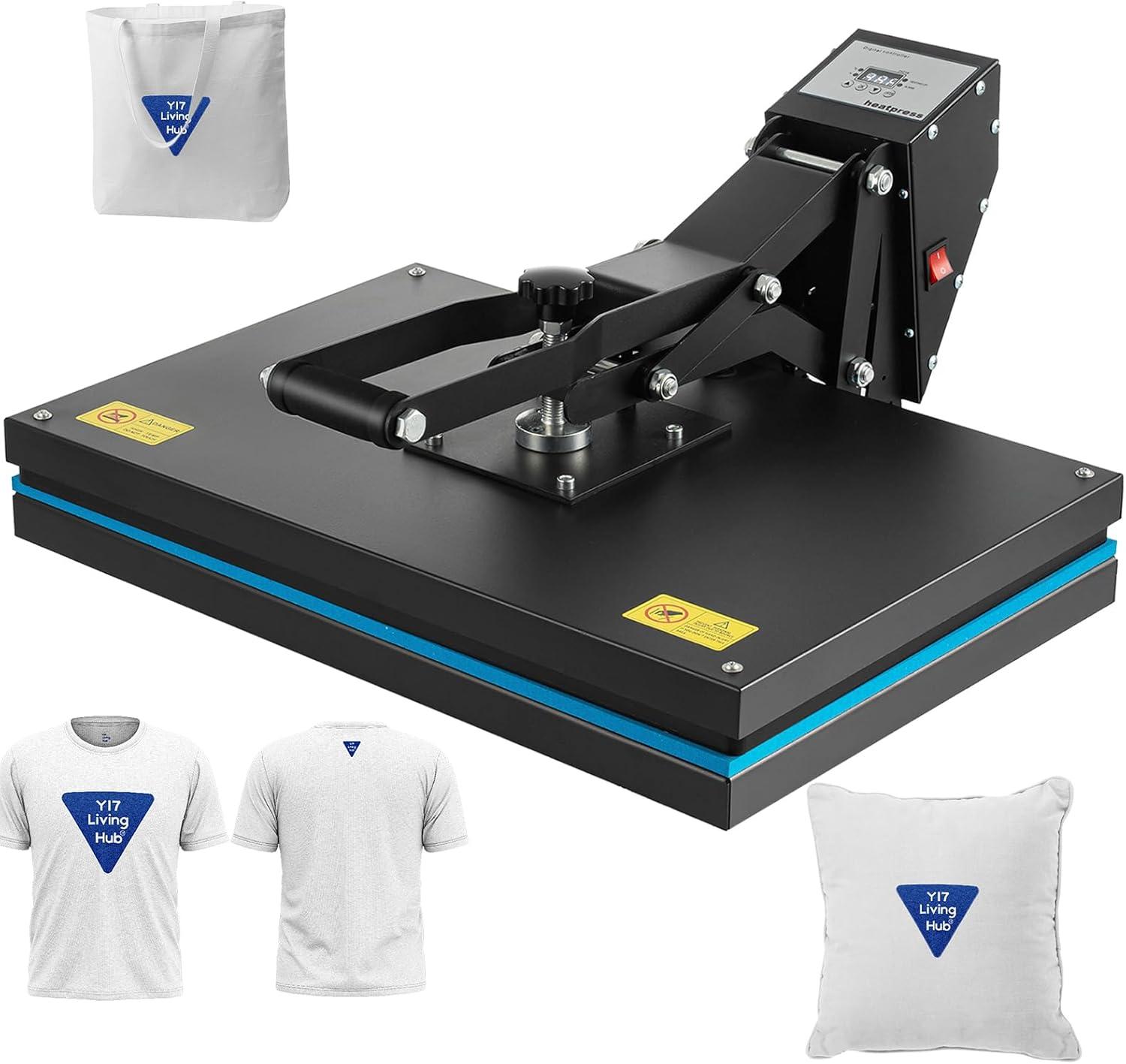
After spending time with the 16×24 clamshell we dug into the specs, user reports and our own hands-on impressions. Below is our honest, first-person-plural take – what thrilled us, and what made us pause.
Pros
- Big platen (16″ x 24″): The surface lets us tackle larger transfers and full-front designs without awkward placement.
- Powerful heating (1800W): Heats quickly and reaches consistent temps for crisp, vibrant transfers.
- Digital controls: Clear LCD, easy (mostly) to set time and temperature – helpful for repeatable results.
- Adjustable pressure & hydraulic rod: Fine pressure control and smoother platen movement make thicker materials manageable.
- Teflon-coated plate & insulation: Even heat distribution and less sticking; we appreciate the faster warm-up and cleaner finishes.
- Great value: For the size and feature set, this machine is competitively priced – lots of users said it’s worth the money.
- Versatility: Works for tees, mouse pads, some novelty items and sublimation projects – a solid multi-purpose starter press.
Cons
- Quality variability: some units arrive defective or lose heat - reviews show a real spread from “perfect” to “no heat.”
- Sturdiness concerns: A few users reported structural failures (e.g., back support arm snapping) and a wobbly base.
- Mixed size expectations: While advertised as large, some buyers found it too small for adult shirts – measure before you buy.
- Missing accessories & docs: Several reports of no attachments or minimal instructions, which means a bit of DIY and trial-and-error.
- Closing effort: Some users said it’s harder to clamp down than other presses - plan for a workout on thick items.
- Packaging / shipping risk: Heavy unit + rough handling = potential for damage on arrival; inspect immediately.
| Aspect | Our takeaway |
|---|---|
| Ease of use | Generally friendly – digital controls help, but there’s a learning curve. |
| Heat & performance | Strong when it effectively works – reliable heat for most transfers. |
| Durability | Mixed – watch for reported structural and shipping issues. |
| Value | Excellent for budget-minded makers who accept some trade-offs. |
We like the size, heat and price – it’s a compelling buy for hobbyists and small shops if you’re prepared for occasional quality variability. If rock-solid durability and turnkey accessories are non-negotiable, you may want to step up to a higher-tier model or confirm warranty/return policies before ordering.
Q&A
Q: What exactly are we getting with this 16×24 heat press?
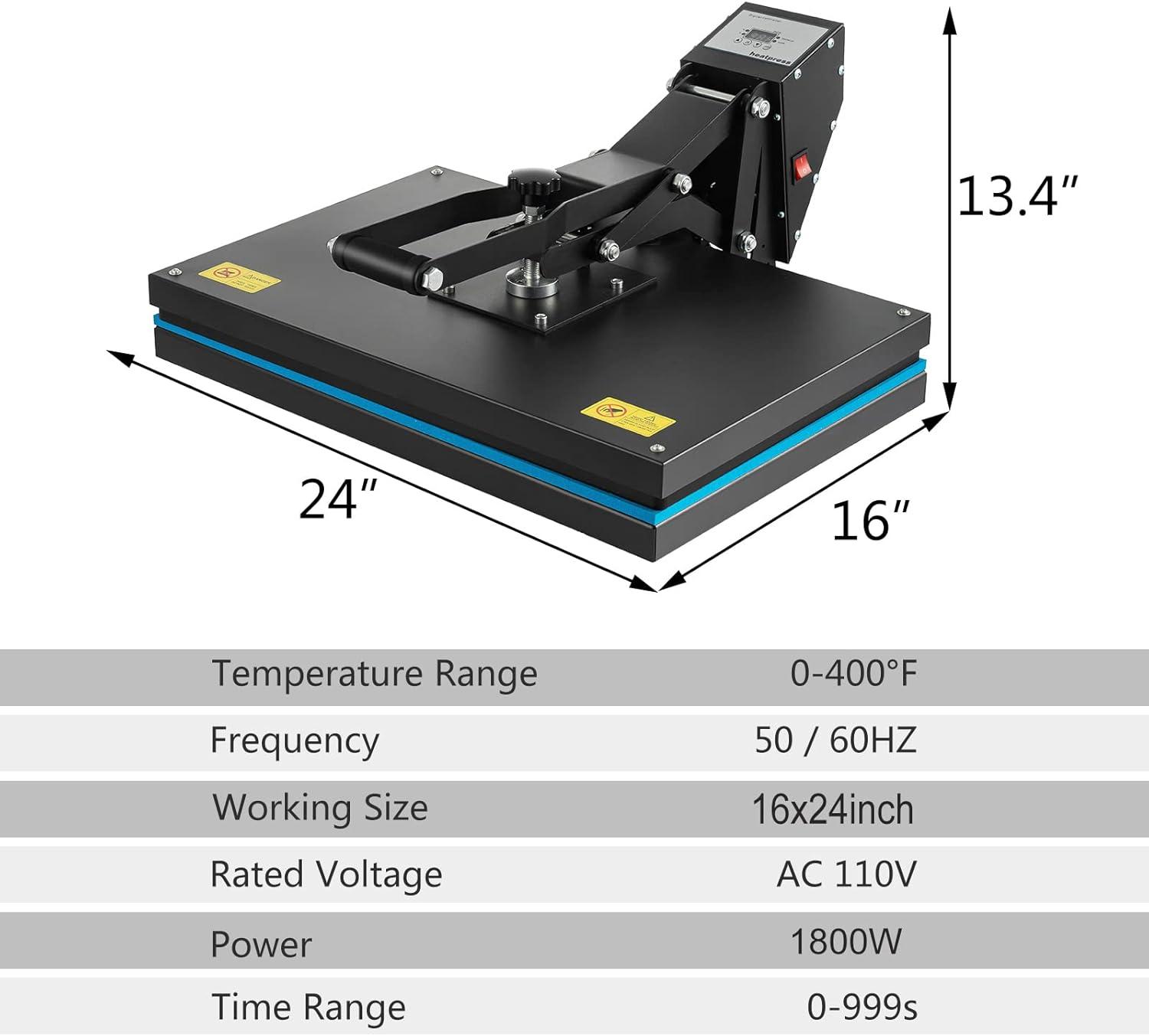
A: We get a clamshell-style 16″ x 24″ heat press with a Teflon-coated upper platen, digital temperature and time controls (32-400 °F / 0-205 °C and 0-999 s), an 1800 W heater that runs on 110 V, an adjustable pressure knob, a hydraulic rod for easier platen control, and two Teflon sheets. The unit is marketed for T‑shirts and other flat items like mouse pads and bags.
Q: Is it easy to use for beginners?
A: yes-overall it’s beginner-friendly. Many reviewers (and we) found the basic setup and controls straightforward. There are two saved program modes; they can be fiddly at first, but with a few presses we understood them. Expect a short learning curve for pressure and timing, especially for DTF or specialty transfers.
Q: How does the heat and temperature control perform?
A: Generally well. Most users reported steady, shop‑level heat and consistent results after the platen reached temperature. A few units were reported as defective (no heat), so it’s crucial to test right away. We recommend preheating and doing test presses to dial in temp/time for your transfers.
Q: Does it generate good pressure for transfers?
A: Yes-pressure is a strong point. Several users praised the pressure performance, and the adjustable knob lets you manage thickness. That said, it can be physically stiff to close for some people; the hydraulic rod helps but doesn’t eliminate the effort on thicker items.
Q: Is the 16×24 size actually useful?
A: It depends on your needs. For most tees up to XL, the surface is ideal; with care you can handle 2XL. Some buyers found it small (saying it was only good for kids’ shirts), while others loved the large working area for bigger projects. If you routinely press full-size adult garments without repositioning, double-check dimensions against your intended work.
Q: Is this machine durable and stable?
A: mixed reports. Many users found it solid enough for hobby and small‑shop use, but several reported sturdiness issues: pad shrinkage over time and at least one instance of the back support arm snapping. The unit is fairly heavy, so it needs a sturdy table. For heavy commercial use we’d consider a more robust (and pricier) model.
Q: Any common defects or quality concerns to watch for?
A: Yes. A handful of reviews mention DOA or non‑heating units, a shrinking bottom pad, missing instructions or accessories, and a broken back support in one case. Shipping boxes can arrive battered; inspect and test the press immediately when it arrives and photograph damage if present.
Q: What extra accessories should we buy?
A: Aside from the two Teflon sheets included, we’d pick up: parchment or extra Teflon sheets for protection, heat‑resistant gloves, a silicone heat‑resistant pad or pressing pillows for curved items, heat tape, and (if doing DTF) powder trays and parchment-lined aluminum pans. Some people substitute low-cost kitchen aluminum trays successfully.
Q: Is it suitable for DTF printing and other specialty processes?
A: Yes, but with caveats. Users have run DTF through trial and error to find ideal settings (some reported 320 °F with specific timing). It can do DTF, sublimation, HTV, and similar processes, but expect testing to avoid scorch or incomplete transfer. Some processes may require additional tools and experience.
Q: How’s value for money?
A: Most reviewers-and we-feel it’s a good value for hobbyists and small businesses. The heat distribution, power, and size at the price point are compelling. Just keep in mind tradeoffs: lower price can mean less polish on durability and fewer built‑in safety/ergonomic features than premium models.
Q: Any safety or setup tips we should follow?
A: Yes.Place the press on a strong, level surface with enough clearance behind and above. Always use protective sheets between the platen and transfers, wear heat‑resistant gloves when positioning garments, and ventilate the room for smells. Unplug when not in use and avoid touching hot surfaces.
Q: What should we do if the unit arrives damaged or won’t heat?
A: Test it immediately. Document shipping damage with photos, try a basic power/plug/outlet check, and contact the seller with your evidence. Several users had trouble with returns and one reported the seller offering a partial refund instead of replacement-so be persistent and keep records.
Q: Who is this press best for?
A: We’d recommend it to hobbyists, crafters, and small custom shops getting started or needing occasional larger surface presses without paying pro prices. We’d be cautious if you plan continuous, high‑volume commercial use without a backup plan.
Q: Final verdict in one sentence?
A: For the price, power and size, it’s a compelling entry‑level 16×24 heat press with solid heating and pressure performance-just expect some compromises in durability, potential out‑of‑box issues, and a small learning curve for specialty transfers.
Seize the Opportunity
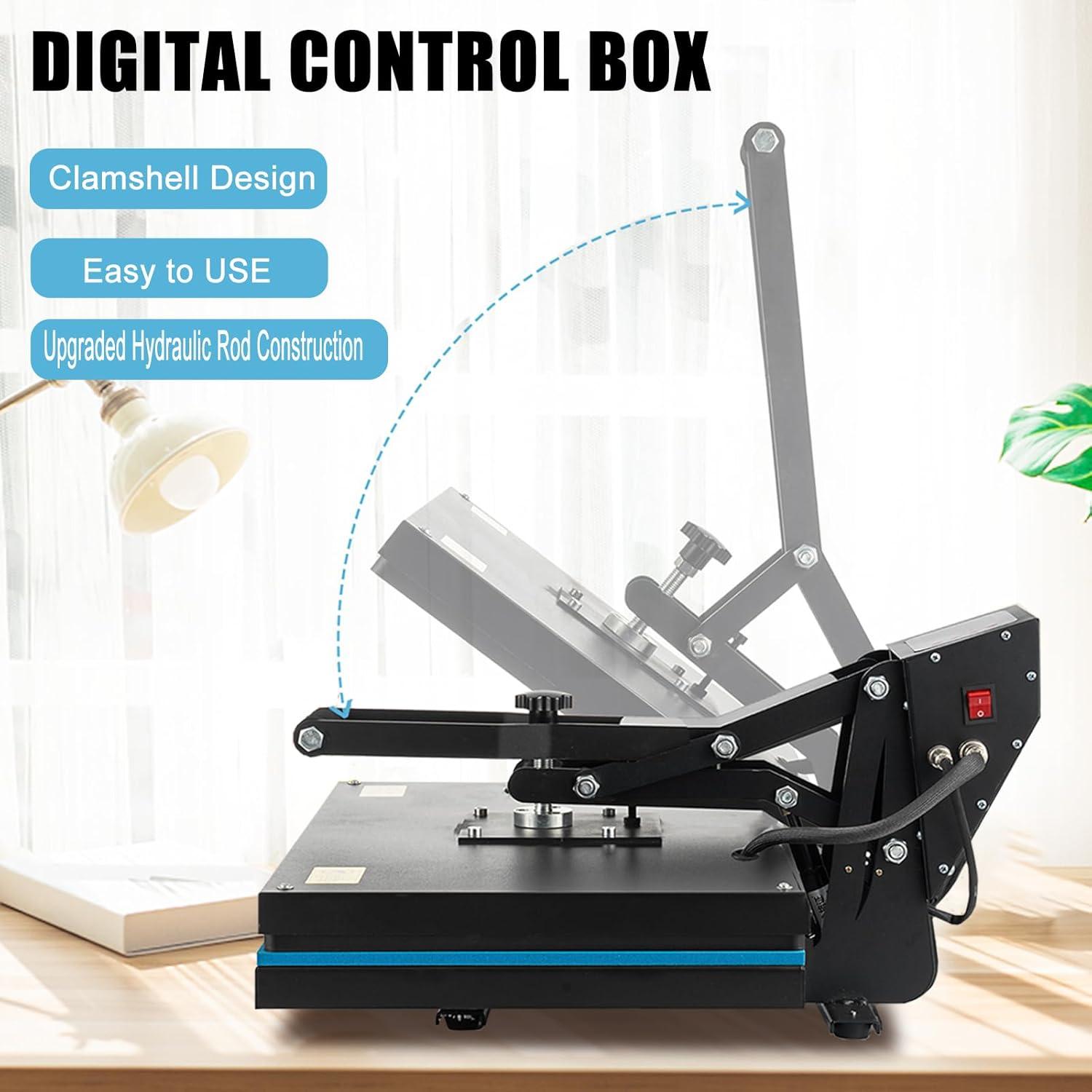
As we fold up our notes and wipe the transfer platen clean, one thing is clear: this 16×24 clamshell heat press surprised us. It gave us reliable, shop-style heat and pressure for projects that fit its footprint, and the digital controls made dialing in time and temperature straightforward. For hobbyists and small-batch creators who want a large working area without a pro-level price tag, it’s an appealing value-especially when transfers come out vibrant and consistent.
Having mentioned that, our journey also flagged real caveats. Size expectations matter (it’s generous for many tees but can feel small for larger garments), and a few users reported durability and functionality issues that tempered enthusiasm. If you’re planning heavy commercial use, or need rock-solid industrial sturdiness, we’d urge extra caution and to double-check warranty and support options. For casual makers, side hustles, and anyone curious about expanding into custom apparel, this unit strikes a compelling balance of features, price, and performance-if you go in with realistic expectations.
If you want to explore it for yourself, read the latest reviews and check current pricing here: See the 16×24 Heat Press on amazon
Thanks for joining us on this heat-pressed detour-keep experimenting, and may your transfers always come out crisp.
Reviews
There are no reviews yet.